

Services
Family-Building Support
1 in 6 people of reproductive age struggle with infertility. Countless employees are navigating IVF, adoption, surrogacy, pregnancy loss, or a long road to parenthood, often without saying a word at work. The burden is invisible, all-consuming, and isolating. The companies that meet their people with real support don't just keep them. They earn their trust, their loyalty, and their best work.

Free to list. We review every submission before it’s published.
why it matters
More benefits ≠ more support
Fertility and family-related benefits jumped 39% in a single year. Yet employees felt 10% less supported.¹
Building a family is one of the hardest things a person goes through, and more employees than ever are weighing how supported they'll feel when they choose where to work and whether to stay. Throwing money at benefits alone doesn't get them there. When the support isn't there, people hide what they're going through, their work suffers, and many of them leave. When it is there, something shifts: people stop white-knuckling it alone, they stay, and they bring their full effort back to a place that showed up for them.
A benefit sitting in a handbook isn't the same as a person feeling safe enough to use it. That difference is where engagement, retention, and trust are won or lost, and it's what we help you close.
¹ Maven, 2026 State of Women's and Family Health Benefits.
The cost of not knowing
When this matters
The signs may not be obvious, but the need almost always exists.
Someone on your team is going through it, and no one knows how to help. When an employee is navigating fertility treatment, a loss, or a hard road to parenthood, the people around them often want to support them but don't know how. The fix is shared: managers and teams who understand these moments and know how to show up.
You're losing people, or losing their best work. Employees pull back, burn out, or leave during fertility treatment, after a loss, or once they start a family. You want them to stay, feel supported, and remain as engaged as possible, even through their hardest seasons. That rarely comes from a policy alone.
Your ERG members or workplace communities aren’t talking about it. Family-building touches a huge number of people, yet it's one of the least-discussed topics at work, even inside the community groups built for support. Opening the conversation makes space for people who’ve been navigating it alone.
You want to lead on this. You'd rather be ahead of what family-building support really means. You want to be known as a company that supports every path to parenthood, openly and from the start. Not because it's expected, but because it's who you are, and how you attract and keep the people you care about.

the invisible burden
When people don’t feel safe, they hide
Without clear signals that it’s safe to share their family-building struggles, employees default to fear. In our ongoing research, we keep hearing about employees hiding, pulling away, and quietly carrying their own burdens because they assume worst-case scenarios if they disclose their challenges at work.
People worry about their careers and promotions. They carry shame, afraid that sharing their struggle will be misconstrued as an excuse not to work. They feel isolated and lonely. So they put on a smile. Try to miss as little work as possible. Pretend like nothing is wrong. And try to sustain a pace that often feels impossible.
The cost runs both ways. People can’t do their best work while hiding, and organizations lose good people without ever understanding why.
how we help
Silence to support
We help organizations support their people through education, conversation, and a clear look at where they stand. Most engagements start with one of these:
Speaking and keynotes. Talks that open the conversation, for conferences, leadership teams, ERG events, or company-wide sessions. Grounded in research and lived experience, and designed to make people feel seen and the topic safe to discuss.
Workshops and training. Practical sessions for managers, teams, and ERGs: how to support someone navigating family-building, what to say and what to avoid around loss or treatment, and how to build the everyday conditions where people feel safe to share.
Family-building audit. A review of where your organization actually stands. We assess your policies, benefits, and infrastructure, and talk with your people through surveys, interviews, and focus groups to understand how supported they truly feel. You receive a report with findings and recommendations, plus a working session to talk through what to prioritize next and how to cultivate a family-building-friendly organization.
Alyssa Birnbaum speaking about family building at work.

what you get
Support people feel
Whatever the engagement, the goal is the same: to close the gap between what you offer and what your people experience. That means:
A clearer picture of how supported your people really feel, based on evidence rather than assumption
Concrete, prioritized recommendations you can act on
Guidance grounded in research and real lived experience, not generic best practices
Managers and teams equipped to respond with care
A culture where family-building can be discussed openly, in all its forms
where this is going
Measurable support
This work is grounded in original research. Alongside prestigious colleagues from Claremont Graduate University, Claremont McKenna College, and Pitzer College, and with funding from the BLAIS foundation, we’re developing and validating a comprehensive measure that can assess how family-building-friendly an organization is: the conditions that determine whether people feel supported across every path to parenthood.
The measure is currently undergoing a series of validation tests. The goal is to give organizations a clear way to see how well they support family-building, and over time, to recognize those who get it right. If your organization would like to be at the forefront of family-building and a part of this critical research, please reach out.
why teal elephant
I’ve been there
I'm an organizational psychologist. Employee listening expert. TEDx speaker.
But I'm also an IVF warrior. I went through two egg retrievals, seven embryo transfers, surgeries, a miscarriage, and a chemical pregnancy to have my daughter.
While I was presenting at conferences, meeting work deadlines, and completing my PhD, I was also managing a schedule of appointments and injections that almost no one around me knew about. I hit so many breaking points. The system wasn’t set up for me to succeed.
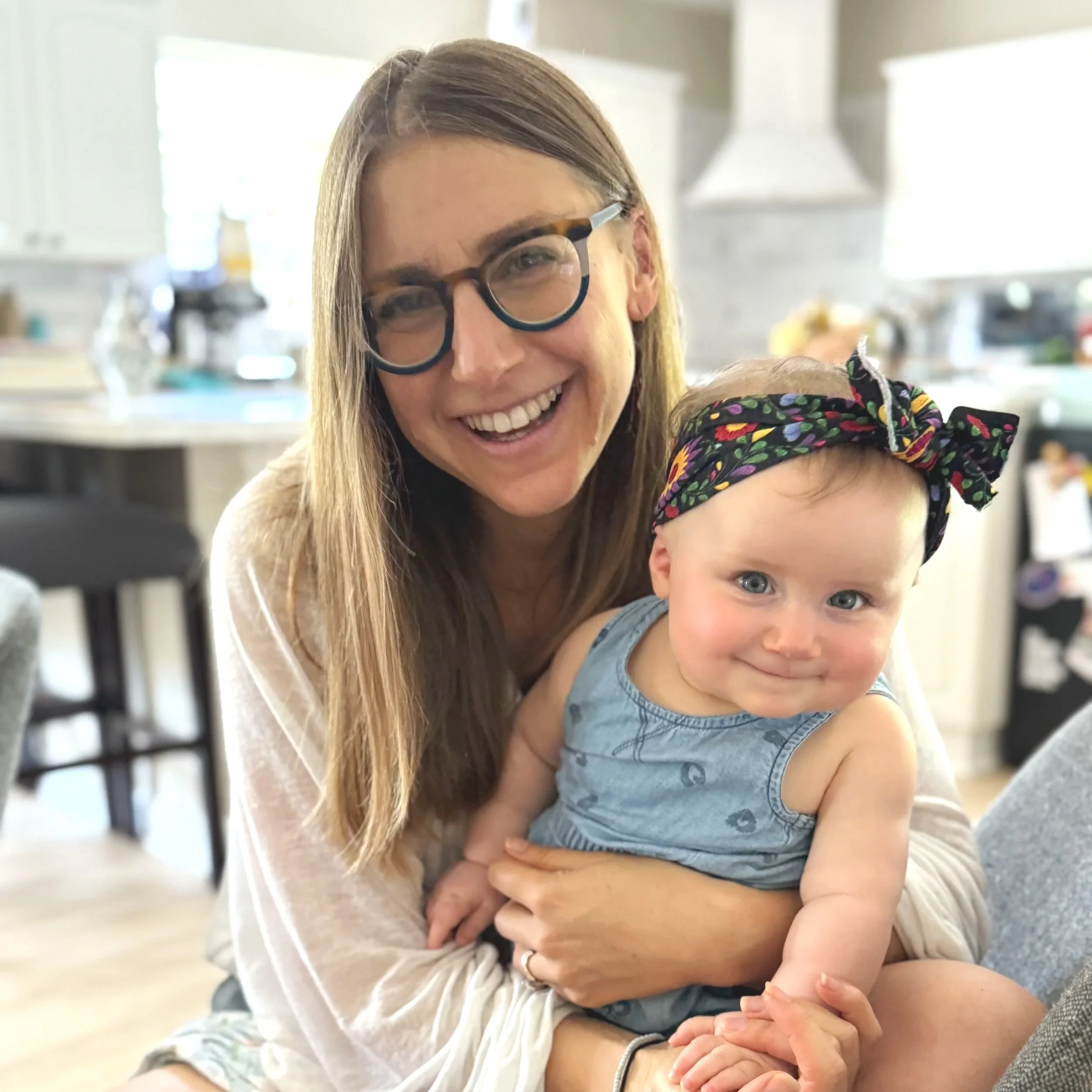
I know what it feels like to carry this quietly at work. It's part of why I lead a peer support group for others going through it, why I openly share about my journey and talk to others who are struggling, and why I do this work at all. I want to help build the kind of support I wish I'd had, and I know we need.

Let’s talk
Ready to open the conversation? Whether you're starting with a talk, a workshop, or an honest look at where you stand, we'd love to hear from you.